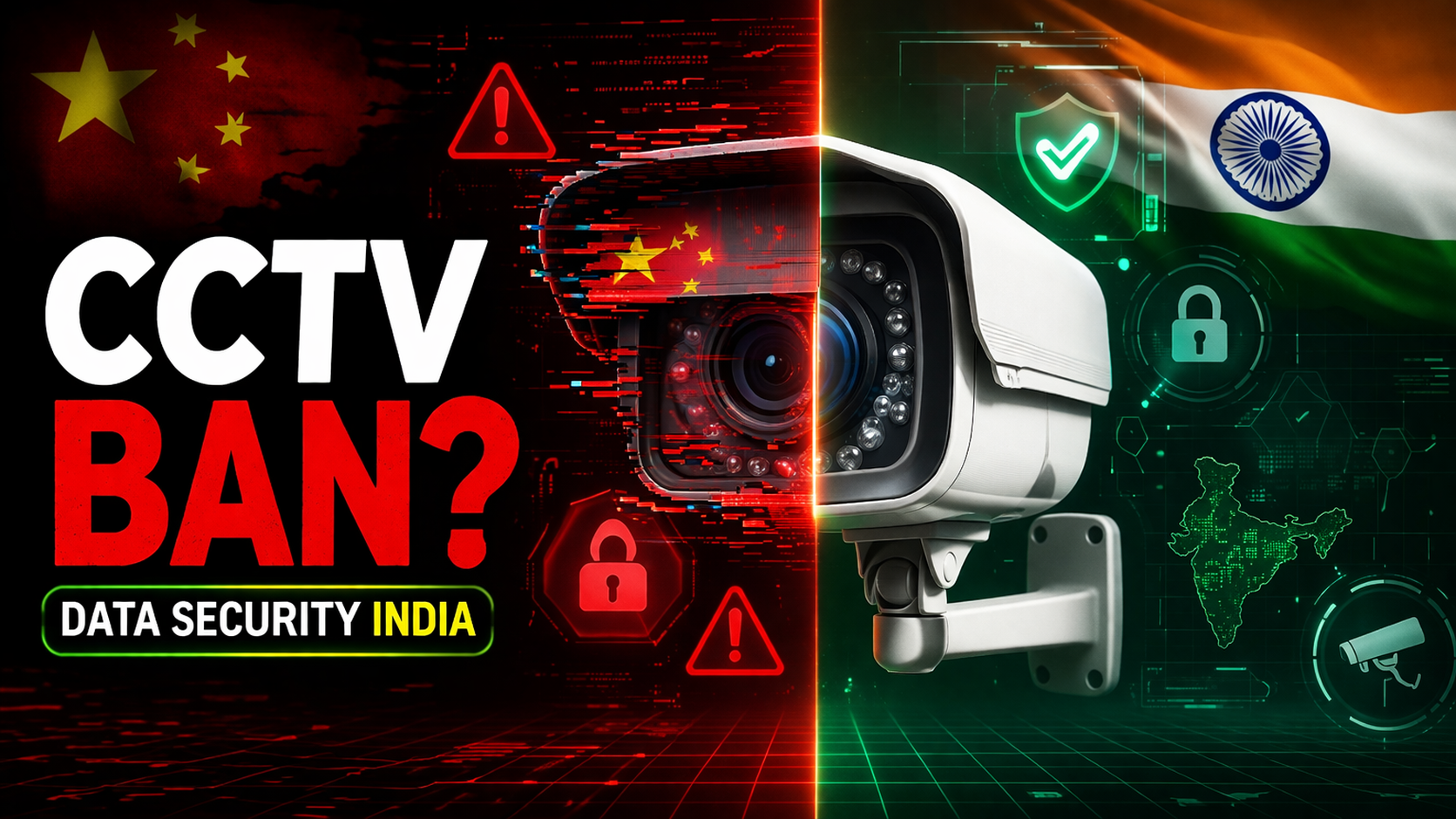
The End of an Era? Understanding Why Chinese CCTV is Being Phased Out of the Indian Market
In the last few years, the landscape of digital security in India has undergone a massive transformation. From banning hundreds of mobile applications to tightening the screws on telecommunications infrastructure, the Indian government’s focus has shifted sharply toward “Data Sovereignty.” One of the most significant moves in this direction is the crackdown on surveillance equipment.
If you are a business owner, a government contractor, or a security-conscious homeowner, you have likely heard the rumors: is Chinese CCTV banned in India?
The answer is multifaceted, involving national security directives, public procurement bans, and a massive push for the “Make in India” initiative. In this article, we dive deep into the current regulations, the brands affected, and what the future holds for surveillance in India.
Why is Chinese CCTV Banned in India? Understanding the Security Risk
The primary driver behind the move to restrict Chinese surveillance technology is cybersecurity. Modern CCTV cameras are no longer just “lenses”; they are Internet of Things (IoT) devices that process vast amounts of data.
Security experts and the Ministry of Electronics and Information Technology (MeitY) have raised several red flags:
- Backdoor Vulnerabilities: Fears that manufacturers like Hikvision and Dahua (which are partially state-owned by the Chinese government) could have “backdoors” allowing foreign intelligence agencies to access live feeds.
- Data Routing: Investigations found that many Chinese-made cameras were routing data through servers located in mainland China, bypassing Indian data residency laws.
- Hardware Trojans: Concerns regarding malicious chips or firmware updates that could disable critical infrastructure during a national emergency.
The Legal Framework: MeitY and Public Procurement Orders
The “ban” isn’t a single blanket law but a series of strategic directives. The most significant is the Public Procurement (Preference to Make in India) Order.
1. The Government Sector Ban
The Indian government has effectively banned the use of Chinese CCTV cameras in all sensitive government installations. This includes airports, railway stations, defense labs, and municipal “Smart City” projects. Any company bidding for a government contract must now prove that their equipment does not originate from a country that shares a land border with India (a direct reference to China) unless they are specifically registered with the competent authority.
2. The “Trusted Sources” Mandate
Taking a leaf out of the telecom sector’s book, the government is moving toward a “Trusted Sources” regime for surveillance. This means only vendors who pass rigorous security audits and disclose their source code and component list can sell to critical sectors.
Which Brands Are Affected?
When discussing the Chinese CCTV banned in India narrative, two giants dominate the conversation:
- Hikvision: The world’s largest surveillance manufacturer. While they have a massive presence in India, they have been delisted from several government-approved vendor lists.
- Dahua: Similarly, Dahua faces strict scrutiny and is largely excluded from new government tenders.
While these brands are still available in the private retail market (for homes and small shops), the government has issued advisories to private enterprises to prioritize “Trusted Sources” to protect corporate espionage.
People Also Ask: Your Top Questions Answered
To help you navigate this transition, we’ve taken the most searched questions from Google’s “People also ask” section regarding this topic.
Is Chinese CCTV banned in India for home use?
Currently, there is no official law banning an individual from buying a Chinese CCTV camera for their private home. However, the government strongly discourages it. Cyber-experts warn that low-cost Chinese cameras are the most vulnerable to hacking, potentially exposing your family’s privacy to global botnets.
Can I still use Hikvision cameras in India?
Yes, you can still use existing Hikvision cameras. However, if you are a government entity or a critical infrastructure provider, you are mandated to replace them with “Trusted Source” equipment. For private users, it is recommended to disable the “Cloud” feature and use a local NVR (Network Video Recorder) to minimize risks.
Which CCTV brands are safe in India?
With the shift away from Chinese tech, several “Safe” alternatives have emerged:
- Indian Brands: CP Plus (for their ‘Make in India’ range), Matrix Comsec, and Sparsh.
- Global Alternatives: Bosch (Germany), Honeywell (USA), Hanwha Vision (South Korea), and Axis Communications (Sweden).
Is CP Plus a Chinese company?
CP Plus is an Indian brand headquartered in Noida. While they previously sourced components globally, they have significantly shifted their manufacturing to India to comply with “Make in India” requirements and government security standards.
The Rise of “Make in India” Surveillance
The restriction on Chinese tech has paved the way for a domestic manufacturing boom. The Indian government’s Production Linked Incentive (PLI) scheme has encouraged companies to set up local SMT (Surface Mount Technology) lines to manufacture PCBs (Printed Circuit Boards) within India.
Key benefits of Indian-made CCTV systems:
- Local Data Servers: Data is stored within Indian borders, complying with the Digital Personal Data Protection (DPDP) Act.
- Secured Firmware: Locally developed software reduces the risk of hidden backdoors.
- Customization: Systems are designed to handle Indian climatic conditions and power fluctuations.
What Should Businesses Do Now?
If you are planning to upgrade your security infrastructure, following these steps will ensure you stay compliant and secure:
- Audit Your Current System: Identify if your cameras are from Hikvision, Dahua, or their subsidiaries (like Ezviz).
- Check for “Trusted Source” Certification: Before purchasing, ask the vendor for MeitY-approved security certifications.
- Update Firmware Regularly: If you must use existing Chinese hardware, ensure the firmware is updated to the latest version to patch known vulnerabilities.
- Isolate the Network: Keep your CCTV network separate from your primary office internet to prevent lateral movement by hackers.
Conclusion
The reality of Chinese CCTV being banned in India is a reflection of a global trend toward “Tech-Nationalism.” For India, it is a necessary step to protect its digital borders and promote self-reliance. While the transition may be costly for some, the long-term benefit of a secure, sovereign surveillance network far outweighs the initial investment.
As we move through 2026, expect even tighter regulations and a complete phase-out of non-trusted surveillance components from the Indian ecosystem.