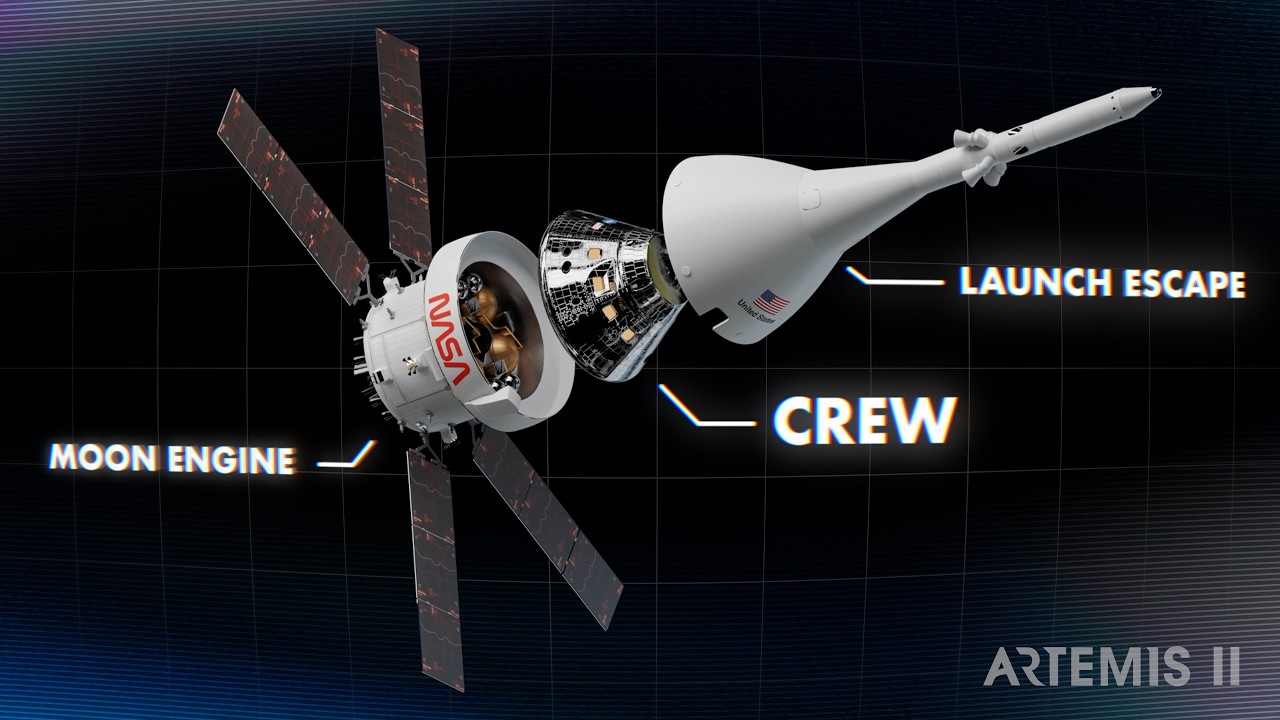
The path to the Moon just got a lot shorter. In a historic milestone for deep space exploration, NASA has officially rolled out the Artemis II Space Launch System (SLS) rocket and Orion spacecraft to Launch Pad 39B at the Kennedy Space Center in Florida. This 4-mile trek from the Vehicle Assembly Building (VAB) signals the final countdown for the first crewed mission to the lunar vicinity in over 50 years.
As the world watches, the 322-foot-tall “Mega Rocket” stands ready. But what goes into preparing the Artemis II launch pad for such a monumental feat? In this guide, we dive into the technical upgrades, the mission timeline, and the answers to the questions everyone is asking.
The Journey to the Pad: 11 Million Pounds on the Move
On January 17, 2026, the integrated SLS and Orion stack began its slow, deliberate crawl toward the Atlantic coast. Carried by the legendary Crawler-Transporter 2, the 11-million-pound assembly moved at a top speed of just 0.82 mph.
Key Rollout Facts:
- Distance: 4.2 miles from the VAB to Launch Complex 39B.
- Duration: Approximately 12 hours.
- Vehicle: Crawler-Transporter 2 (upgraded from the Apollo and Shuttle eras to handle the SLS’s immense weight).
- Precision: The crawler uses a sophisticated leveling system to ensure the rocket stays perfectly vertical while navigating the gentle slopes of the “crawlerway.”
Upgrading Launch Pad 39B for a New Era
Launch Pad 39B is no stranger to history—it hosted the Apollo 10 mission and numerous Space Shuttle launches. However, for Artemis II, NASA has implemented massive infrastructure upgrades to handle the 8.8 million pounds of thrust generated by the SLS.
- New Ignition Overpressure Protection: A massive water deluge system (Sound Suppression System) that dumps 450,000 gallons of water in seconds to protect the rocket from acoustic energy.
- Liquid Hydrogen Tank Upgrades: A new 1.4-million-gallon liquid hydrogen sphere to ensure the SLS has enough fuel for a “scrub” and a quick turnaround.
- Crew Access Arm (CAA): A bridge at the 274-foot level that allows the four astronauts to board the Orion capsule.
- Emergency Egress System: Upgraded “baskets” on wires that can whisk the crew and pad personnel away to safety in seconds if an emergency occurs before liftoff.
People Also Ask
When is the Artemis 2 launch date?
NASA is currently targeting a launch window starting no earlier than February 6, 2026. This date depends heavily on the success of the “Wet Dress Rehearsal” (WDR) scheduled for early February. Additional windows are available in March and April 2026 if weather or technical issues arise.
Who are the crew members of Artemis 2?
The Artemis II mission features a diverse and highly skilled crew of four:
- Reid Wiseman (Commander): NASA veteran and former Chief of the Astronaut Office.
- Victor Glover (Pilot): The first person of color to fly on a lunar mission.
- Christina Koch (Mission Specialist): Holder of the record for the longest single spaceflight by a woman; she will be the first woman to reach the Moon.
- Jeremy Hansen (Mission Specialist): A Canadian Space Agency (CSA) astronaut, making him the first non-American to travel to deep space.
Is Artemis 2 landing on the Moon?
No. Artemis II is a “lunar flyby” mission. The crew will fly a “free-return trajectory,” looping around the far side of the Moon before using lunar gravity to sling them back toward Earth for a Pacific Ocean splashdown. This mission is designed to test life support systems and the Orion heat shield before the Artemis III lunar landing mission (currently slated for 2027/2028).
How long will the Artemis 2 mission last?
The mission is expected to last approximately 10 days. The first two days will be spent in a high Earth orbit to test the spacecraft’s systems before the “Trans-Lunar Injection” burn that sends them toward the Moon.
Technical Specifications: The Power of SLS
The Space Launch System is the only rocket capable of sending a crewed spacecraft directly to the Moon. Its core stage, flanked by two 17-story solid rocket boosters, produces more thrust than the legendary Saturn V.
- Height: 322 feet (approx. 98 meters).
- Thrust at Liftoff: 8.8 million pounds.
- Payload: Orion Spacecraft & European Service Module (ESM).
- Fueling: Nearly 800,000 gallons of super-cold liquid hydrogen and liquid oxygen.
What Happens Next? The Road to Launch
Now that the rocket is at the Artemis II launch pad, the clock is ticking. Here are the major milestones to watch for in the coming weeks:
- Pad Connections (Ongoing): Engineers are currently connecting electrical, fuel, and data lines from the pad to the Mobile Launcher.
- Wet Dress Rehearsal (Targeted Feb 2): This is a full “practice run.” NASA will fill the rocket with fuel and run the countdown until just seconds before “T-Zero.”
- Final Checks: After the fueling test, the fuel is drained, and teams perform a final inspection.
- Launch Day (Feb 6 or later): The crew arrives at the pad, boards Orion, and begins the journey of a lifetime.
Why Artemis II Matters
Artemis II isn’t just a test flight; it is a bridge to the future. By returning humans to the vicinity of the Moon, NASA is laying the groundwork for the Lunar Gateway (a space station in moon orbit) and eventually, human missions to Mars.
The site of the towering SLS at Launch Pad 39B serves as a powerful reminder of what humanity can achieve. As Launch Director Charlie Blackwell-Thompson noted, “Artemis I was a test of the machine; Artemis II is a test for the crew.”
Summary of Artemis II Mission Goals:
- Demonstrate Orion’s life support systems with humans aboard.
- Validate deep-space communication and navigation.
- Verify the heat shield’s performance at lunar re-entry speeds (approx. 25,000 mph).
- Inspire the “Artemis Generation” to continue exploring the stars.