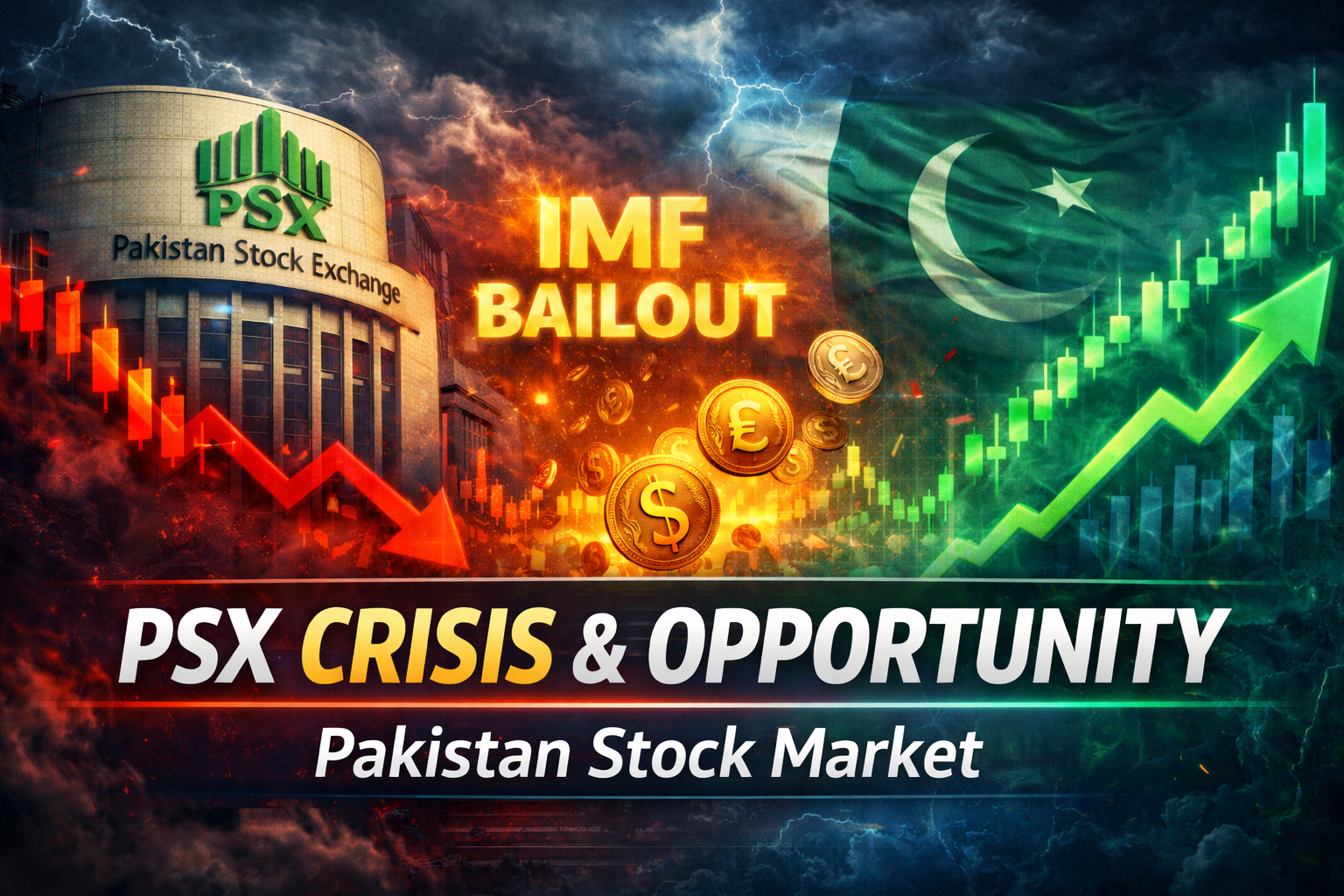
In today’s globalized world, the stock market is considered the mirror of a country’s economy. When discussing our neighboring country, the “Pakistan Stock Exchange” (PSX) often becomes a focal point of intense discussion. Major media outlets like Aaj Tak News frequently highlight the volatility of the Pakistani share market amidst the country’s ongoing economic challenges.
In this comprehensive guide, we will explore the history of the Pakistan Stock Exchange, its major indices, the current economic impact, and the challenges faced by investors in that region.
The History of the Pakistan Stock Exchange (PSX)
The current structure of the Pakistan Stock Exchange is relatively young. It was officially established on January 11, 2016. Before this unification, Pakistan had three separate stock exchanges operating independently:
- Karachi Stock Exchange (KSE) – Established in 1947.
- Lahore Stock Exchange (LSE) – Established in 1970.
- Islamabad Stock Exchange (ISE) – Established in 1989.
To increase efficiency and attract foreign investment, these three entities were merged into a single integrated institution known as the Pakistan Stock Exchange (PSX). Its headquarters is located in Karachi, which is the financial hub of Pakistan.
Major Indices of the PSX
To understand the direction of any share market, one must look at its indices. The Pakistan Stock Exchange primarily operates with four major indices:
- KSE 100 Index: This is the most important index of the PSX. It includes the top 100 companies based on market capitalization. It serves as the primary benchmark for the health of the entire economy.
- KSE 30 Index: This index tracks the performance of the top 30 companies based on free-float market capitalization, representing the most liquid stocks.
- KSE All Share Index: This index tracks the performance of all companies listed on the exchange.
- KMI 30 Index: Specifically designed for Islamic finance, this index includes 30 “Shariah-compliant” companies.
Pakistan Share Market and the Economy
If you follow reports from Aaj Tak News and other international financial analysts, you might have noticed that Pakistan’s economy has been through a severe crisis over the last few years. This has a direct impact on the stock market:
- The IMF Factor: Pakistan’s economy relies heavily on bailouts from the International Monetary Fund (IMF). Whenever news of an IMF deal breaks, the PSX often sees a massive surge. Conversely, delays lead to crashes.
- Inflation and Interest Rates: Pakistan has faced record-high inflation. To combat this, the central bank raises interest rates, which often discourages investors from putting money into the share market, as they prefer fixed-income returns.
- Foreign Investment Scarcity: Due to political instability and security concerns, many foreign institutional investors maintain a cautious stance toward Pakistan.
People Also Ask: Common Questions About PSX
Based on Google “People Also Ask” data, here are the answers to the most frequent queries:
1. Who owns the Pakistan Stock Exchange?
The PSX is not owned by a single individual. In 2017, a Chinese consortium (comprising the Shanghai Stock Exchange and Shenzhen Stock Exchange) purchased a 40% strategic stake in the PSX. The remaining shares are held by the general public and local financial institutions.
2. Can Indian citizens invest in the Pakistan Stock Exchange?
Given the current diplomatic and political relations, it is virtually impossible for Indian citizens to invest directly in the Pakistan stock market. Under India’s FEMA (Foreign Exchange Management Act) regulations, there are strict prohibitions on investing in Pakistani entities.
3. Which are the biggest companies listed on the PSX?
Some of the largest and most influential companies include Lucky Cement, Oil and Gas Development Company (OGDC), Habib Bank Limited (HBL), and Engro Corporation.
4. What are the trading hours of the Pakistan Stock Exchange?
The PSX operates from Monday to Friday, generally from 9:30 AM to 4:30 PM (local time). On Fridays, there is usually a break for Jumu’ah prayers.
Risks Involved in the Pakistan Stock Exchange
Investing in the Pakistan share market comes with significant risks that any investor must consider:
- Currency Devaluation: The Pakistani Rupee (PKR) has consistently depreciated against the US Dollar. Even if an investor makes a profit in terms of percentage, the falling value of the currency can result in an actual loss when converted back to a stable currency.
- Political Instability: Frequent changes in government, protests, and policy shifts create a climate of uncertainty, which markets generally dislike.
- FATF and Grey Lists: Pakistan’s history with the FATF (Financial Action Task Force) grey list has previously hampered international banking transactions and foreign direct investment.
How the PSX Operates: Regulation and Trading
The Pakistan Stock Exchange is regulated by the Securities and Exchange Commission of Pakistan (SECP). The SECP ensures transparency and protects the interests of minority shareholders.
The Trading Process:
- Selecting a Broker: To start trading, one must open a brokerage account with a licensed member.
- CDC Account: The Central Depository Company (CDC) acts as the digital vault where shares are held, similar to NSDL or CDSL in India.
- KITS System: PSX uses the ‘Karachi Internet Trading System’ (KITS), providing a modern electronic platform for buyers and sellers.
The Future Outlook of PSX
The Pakistan Stock Exchange remains in a delicate position. While it is often classified as a “Frontier Market” with high growth potential, it remains highly sensitive to macroeconomic indicators. As per Aaj Tak News and economic experts, unless Pakistan achieves political stability and implements long-term structural reforms, the market will continue to be a “rollercoaster” for investors.
For those interested in global finance, studying the PSX offers a lesson in how geopolitics and debt cycles affect capital markets. However, for growth and stability, the Indian stock markets (NSE/BSE) currently offer a much more robust environment.